Beyond the Temperature: Programming Your Way Through Humidity with HVAC Maintenance in Winter Park
You've set your thermostat perfectly — so why does your Winter Park home still feel muggy? After servicing thousands of Central Florida systems, we've learned that temperature and comfort are two very different things. Humidity is the hidden variable most HVAC programs completely ignore, and in Winter Park, that oversight costs homeowners in comfort, air quality, and energy bills every single month. Here's what we've seen work: the right thermostat programming paired with targeted HVAC maintenance doesn't just cool your home — it controls the moisture that makes Florida living so relentless. This page gives you the exact local insights and system adjustments that keep Winter Park families genuinely comfortable year-round.
TL;DR Quick Answers
Winter Park homes feel uncomfortable even at the right temperature because humidity — not heat — is the real comfort variable Central Florida never stops throwing at you.
The short answer:
Temperature and humidity are two separate problems
Most HVAC systems are only programmed to solve one of them
Proper thermostat programming and routine maintenance fix both
What works in Winter Park homes:
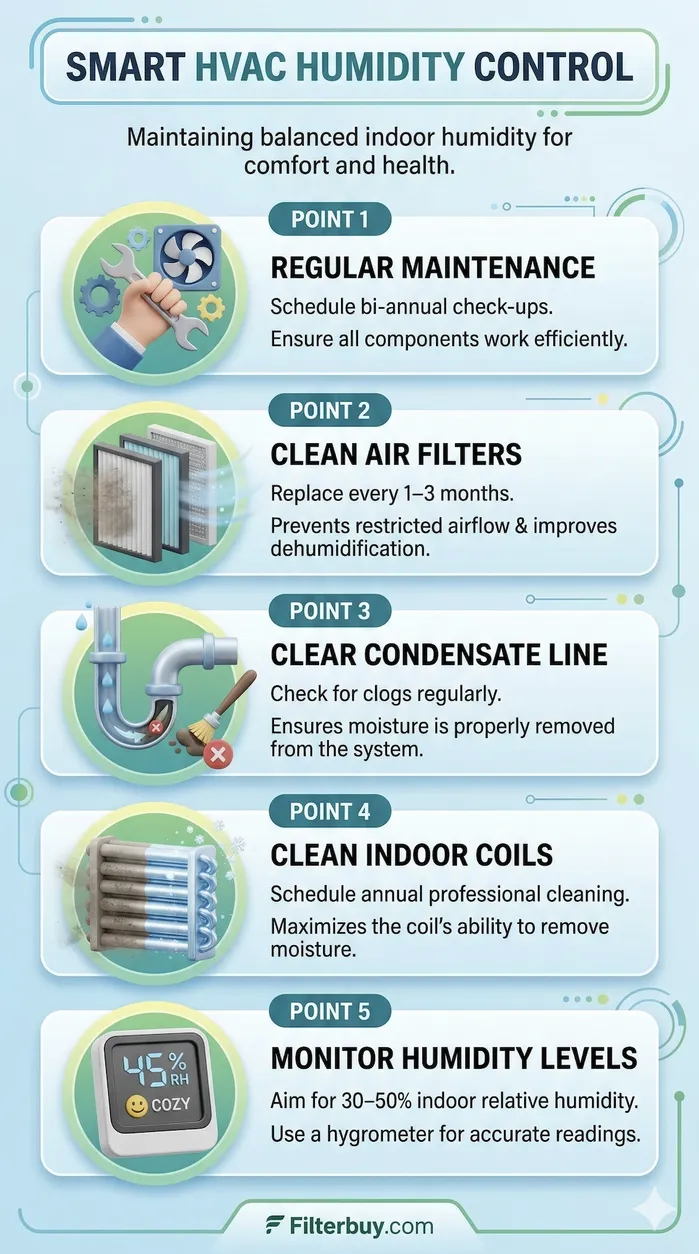
Set indoor humidity targets between 30–50% year-round
Adjust fan cycles so your coil has time to dehumidify
Keep your coil clean, drain line clear, and filter fresh
Upgrade to a smart thermostat with humidity sensing
The bottom line: A system programmed only for temperature is fighting half the battle in Central Florida. Program it for humidity too — and your home will finally feel as comfortable as it reads on the thermostat.
Top Takeaways
Temperature and comfort are not the same thing.
Humidity determines how your home actually feels
Most thermostats are programmed to ignore it entirely
Your default thermostat settings are working against you.
Factory programming was built for dry northern climates
Adjusted fan cycles and cooling setpoints give your coil time to dehumidify
HVAC maintenance is your frontline humidity defense.
Dirty coils, blocked drain lines, and restricted filters kill dehumidification
Consistent upkeep is non-negotiable in Central Florida's climate
Humidity control is a year-round priority — not a summer reaction.
Central Florida moisture doesn't disappear in winter
Target 40–50% relative humidity every month of the year
Proper programming paired with routine maintenance changes everything. Comfort complaints decrease , energy costs drop , and your home finally feels as good as it reads on the thermostat.
Why Temperature Alone Doesn't Tell the Full Story in Winter Park
Central Florida's humidity doesn't take a winter break. Even on cooler January days, Winter Park homes can sit at 65–70% relative humidity — well above the 30–50% range where families feel truly comfortable. When your HVAC system only chases temperature, moisture builds up in your ductwork, settles into walls, and circulates through every room your family breathes in daily.
How Your Thermostat Settings Are Working Against You
Most programmable thermostats ship with default settings built for dry northern climates. In Winter Park, those defaults leave your system cycling off too quickly — cooling the air but never running long enough to pull meaningful moisture out. Switching your fan setting from AUTO to a timed interval run, and lowering your cooling setpoint by just 1–2 degrees, gives your evaporator coil the contact time it needs to dehumidify effectively. We recommend scheduling professional HVAC Maintenance in Winter Park for better efficiency to ensure your programming aligns with your system's capabilities.
The HVAC Maintenance Habits That Actually Control Humidity
A dirty evaporator coil, clogged drain line, or worn blower motor doesn't just hurt efficiency — it destroys your system's ability to manage moisture. From what we've seen servicing Winter Park homes, the three maintenance steps that directly impact humidity control are:
Coil cleaning — A clean evaporator coil transfers heat and pulls moisture efficiently.
Drain line flushing — Standing water in a blocked condensate line feeds mold and pushes humidity back into your air supply.
Filter changes — A restricted filter reduces airflow across the coil, cutting dehumidification before your system ever gets the chance to work. It is helpful to know how often to replace your specific unit's filter.
Smart Thermostats and Humidity Sensors: A Winter Park Game Changer
Upgrading to a smart thermostat with a built-in or paired humidity sensor gives your system a second set of instructions — one based on moisture, not just degrees. Models compatible with your existing system can trigger longer cooling cycles when indoor humidity climbs, regardless of what the temperature reads. For Winter Park homeowners dealing with older duct systems, this single upgrade often delivers the comfort improvement that years of temperature-only programming never could.
Seasonal Programming Adjustments Winter Park Homeowners Should Make
Winter Park's mild winters still carry enough humidity to cause problems — particularly in homes that shift to heat mode and forget about moisture entirely. A well-programmed system should maintain indoor humidity between 40–50% year-round and run periodic fan cycles in winter to prevent stagnant, damp air pockets. Small seasonal adjustments made consistently protect your home, your HVAC equipment, and your family's air quality far better than any single reactive repair ever will.
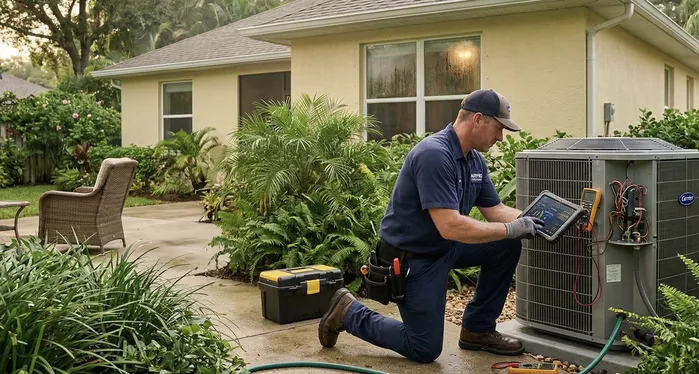
"In our experience servicing Winter Park homes, the families who struggle most with comfort aren't dealing with a broken system — they're dealing with a thermostat programmed to ignore the one thing Central Florida never stops throwing at you: humidity."
Your Winter Park Humidity Problem Has a Fix — Start With These Expert Resources
EPA Mold & Moisture Control — Understand the Humidity Levels That Put Your Family and Home at Risk After helping thousands of Central Florida homeowners tackle humidity problems, we point every customer to this EPA resource first because knowing your target humidity range is where real protection begins. ???? https://www.epa.gov/mold/mold-course-chapter-2
U.S. Department of Energy Thermostat Guide — Stop Programming Your System for a Climate You Don't Live In The default settings on most programmable thermostats were never designed for Florida humidity. This DOE guide gives you the programming foundation your system actually needs. ???? https://www.energy.gov/energysaver/thermostats
ASHRAE Standard 55 — The Comfort Benchmark We Use When Evaluating Your Home's Air Understanding what ASHRAE Standard 55 actually measures helps you ask better questions and make smarter decisions about your home's comfort. ???? https://www.ashrae.org/technical-resources/bookstore/standard-55-thermal-environmental-conditions-for-human-occupancy
EPA Indoor Air Quality Home Guide — See the Full Picture of What Your Family Is Breathing This comprehensive EPA guide connects filtration, ventilation, and moisture control in a way every Winter Park homeowner deserves to understand. ???? https://www.epa.gov/indoor-air-quality-iaq/inside-story-guide-indoor-air-quality
Florida Department of Health IAQ Resources — Finally, Air Quality Guidance That Understands Where You Actually Live This resource speaks directly to the air quality and moisture challenges our community actually faces. ???? https://www.floridahealth.gov/environmental-health/indoor-air-quality/index.html
DOE HVAC Maintenance Guide — The Maintenance Habits That Are Your First Line of Defense Against Humidity Pro tip: a dirty coil, blocked drain line, or restricted filter doesn't just hurt efficiency — it eliminates your system's ability to pull moisture out of your air entirely. ???? https://www.energy.gov/energysaver/heat-and-cool/maintaining-your-equipment
NIST Whole-House Humidity Control Research — When Room-by-Room Fixes Stop Working, This Is Where Real Solutions Begin If your home has persistent humidity pockets, this NIST research is exactly where your research should go next. ???? https://www.nist.gov/topics/indoor-air-quality
Supporting Statistics: What the Data Says About Humidity, HVAC Performance, and Indoor Air Quality
The EPA's Humidity Threshold — The Number Every Winter Park Thermostat Should Be Programmed Around The EPA recommends indoor relative humidity stay between 30–50% — and never exceed 60%. What we see in Winter Park homes tells the same story:
Most comfort complaints trace directly back to systems running outside this range
Central Florida's climate pushes against that threshold year-round
A thermostat programmed only for temperature will never catch the moisture problem ???? https://www.epa.gov/mold/mold-course-chapter-2
Americans Spend 90% of Their Time Indoors — Which Makes Your Winter Park Home's Air Quality a Daily Health Factor The EPA confirms indoor pollutant concentrations can run 2–5 times higher than outdoor levels. In Winter Park:
Families mistake persistent allergy symptoms for seasonal pollen
Using a pleated home HVAC furnace filter can help maintain your sanctuary ???? https://www.epa.gov/indoor-air-quality-iaq/inside-story-guide-indoor-air-quality
Heating and Cooling Is Nearly 43% of Your Energy Bill — And Humidity Is One of the Most Expensive Line Items The DOE identifies improper thermostat programming and neglected maintenance as leading drivers of unnecessary energy costs.
Humidity is the hidden multiplier most homeowners never account for
A system fighting unmanaged moisture runs longer cycles and costs more
You can find a top cheap pleated air filter to assist with efficiency. ???? https://www.energy.gov/energysaver/thermostats
Final Thoughts: Comfort in Winter Park Was Never Just About the Temperature
Your thermostat is only as smart as the instructions you give it. Temperature is easy to chase — humidity is invisible, relentless, and far more damaging when ignored. Struggling homes rarely have failing equipment; they have systems never properly set up to fight the right enemy. When you change your AC filter regularly, you ensure air quality your family can actually feel the difference in.
Frequently Asked Questions
Q: Why does my Winter Park home feel humid even when my thermostat is set to the right temperature?
A: Temperature and humidity are two separate factors. Thermostats often cycle off before the coil pulls meaningful moisture out, leaving the home reading 72°F but feeling like a wet blanket.
Q: What indoor humidity level should I be targeting in my Winter Park home? A: The EPA target is 30–50% relative humidity year-round. We tell every Winter Park homeowner to treat 50% as your ceiling. You can achieve this by using a 12x24x1 air filter or similar size appropriate for your unit.
Q: How does HVAC maintenance directly affect my home's humidity levels?
A: Three components determine whether your system can actually dehumidify: the evaporator coil, the condensate drain line, and the air filter. A pleated home air conditioner filter ensures the airflow necessary for dehumidification to begin.
Q: Does humidity control matter in Winter Park during winter months?
A: Yes. Ambient moisture stays high even in cooler months, and skipping control can lead to mold and musty odors by spring. It is wise to buy best cheap filters in bulk to maintain year-round air quality.
Q: Is a smart thermostat worth the upgrade specifically for humidity control in Winter Park?
A: Yes. A humidity-sensing smart thermostat triggers longer cooling cycles when moisture rises, responding to humidity independently of temperature readings. You can also find MERV 8 dust defense filters to further enhance this setup.
Ready to Go Beyond the Temperature? Let Filterbuy HVAC Solutions Program Your Way to Real Comfort in Winter Park
Stop letting hidden humidity undermine your home's comfort and air quality — our local Winter Park HVAC experts are ready to assess your system and optimize your programming. Contact us today for a free consultation.
Learn more about HVAC Care from one of our HVAC solutions branches…
Filterbuy HVAC Solutions - Miami FL - Air Conditioning Service
1300 S Miami Ave Apt 4806 Miami FL 33130
(305) 306-5027
https://maps.app.goo.gl/Ci1vrL596LhvXKU79